Blog
2026-07-24
Ernesto Velasco Publishes Article in The Latin American Lawyer: "Compliance: From Corporate Crime to Human Rights"
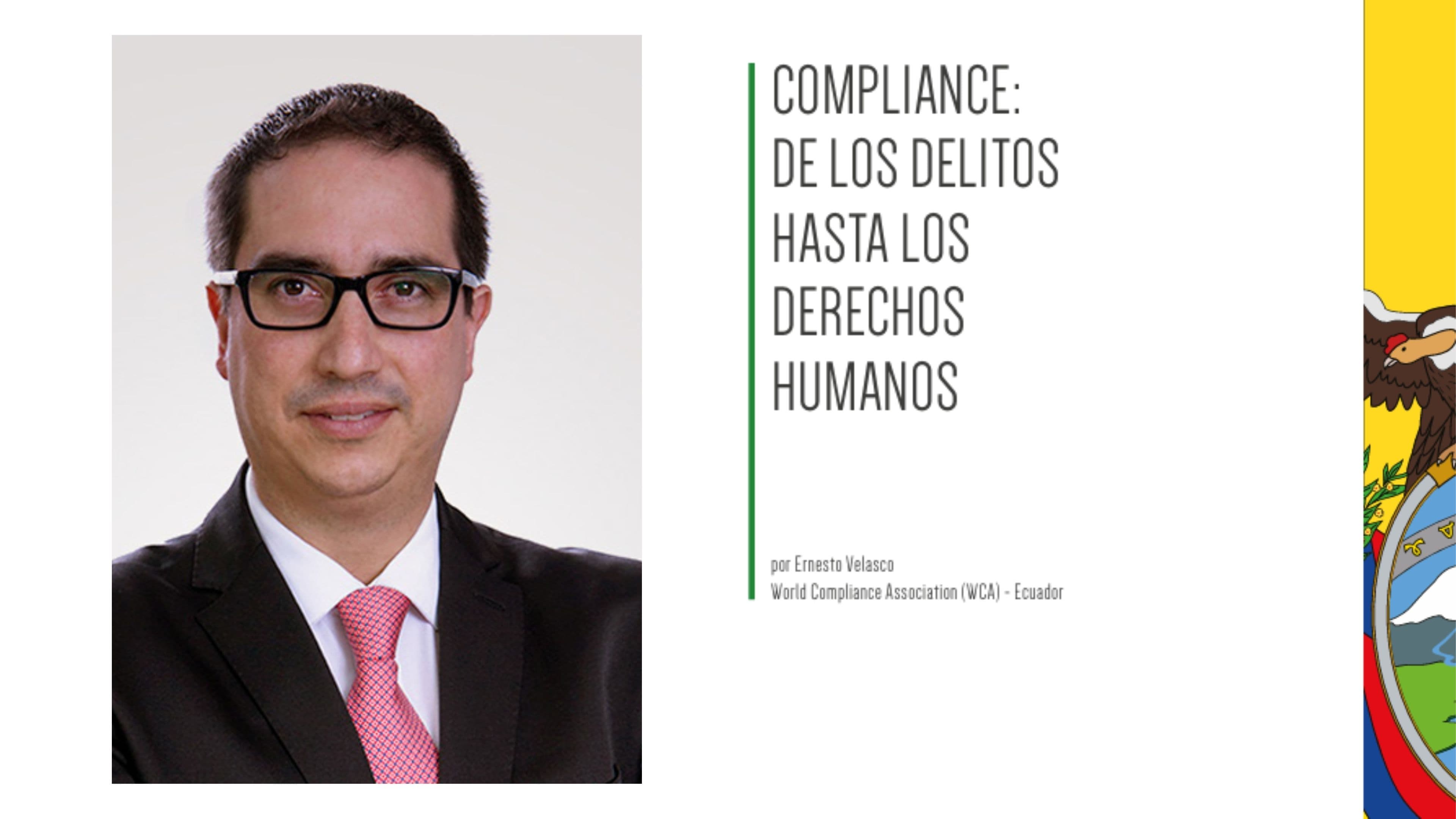
In the Ecuadorian, and more broadly Latin American, business environment, compliance has moved from being a legal technicality to becoming a genuine management strategy. This shift takes place in a context where regulation is becoming increasingly “strict” and public opinion increasingly demanding. As we know, regulatory compliance now seeks not only to avoid sanctions, but also to ensure that organizations act with a genuine sense of purpose.
We share the article published by our lawyer Ernesto Velasco in The Latin American Lawyer on the evolution of compliance.
The Evolution of Compliance: From Crime Prevention to Labor Rights
Five decades ago, compliance was associated with the prevention of corporate or financial crimes. With the shift from purely economic matters to labor matters, a debate has emerged regarding corporate obligations toward their employees and toward the employees of their suppliers.
The scope of the State-citizen dichotomy — the classic paradigm of the relationship governed by human rights doctrine — has been broadened to include the employer-employee relationship, whether the employer is a natural person or a legal entity.
This gives rise to a set of obligations that a company, in the broad sense, may acquire, which entail acting in accordance with the law and remedying any damage it may cause.
A compliance system precisely allows for the identification, prevention, and mitigation of legal risks before they become disputes or sanctions.
Compliance as a System of Corporate Self-Regulation
Now, although compliance requirements are increasingly permeating national legislation as requirements and/or mitigating or exempting factors of liability, it is important to remember its origin: compliance is, essentially, self-regulation.
What a program seeks to achieve is the establishment of a culture; that is, a way of acting based on due diligence and organizational ethics.
Self-regulated internal rules, regulations, manuals, and codes should no longer be viewed as mere bureaucratic requirements, but as tools for reputational management and for protecting the rights of all parties related to the company.
Essential Elements of a Compliance Program
Today, a compliance program’s benchmark should include, at a minimum, transparent hiring policies, protocols against harassment or discrimination, occupational health and safety measures, and internal reporting mechanisms.
In particular, the whistleblowing channel constitutes an essential tool that allows employees to report irregularities without fear of retaliation, and demonstrates the company’s genuine commitment to ethics and to a healthy work environment free of all forms of violence.
Compliance for Micro and Small Businesses in Ecuador
It is estimated that 90% of companies in Ecuador are micro or small businesses, which poses the challenge of implementing models proportional to their size and resources.
In these cases, the compliance function may be assumed by a single individual or by a collegiate body, provided it has independence, training, and support from management.
The key lies not in the complexity of the system, but in its authenticity.
How to Build a Living and Effective Compliance System
A living compliance program requires ongoing training, accessible channels, clear communication that makes the purpose of internal policies understandable, and commitment — which includes budget.
A code of ethics is of no use if employees do not recognize it as a practical guide for their daily work, and even as a compass in their personal lives.
Compliance, Human Rights, and Supply Chains
Modern compliance is no longer limited to protecting the company from legal risks: it also protects the people who make up the company and the participants in its extensive supply chains.
By incorporating human rights into their policies and processes, organizations recognize that their legitimacy does not depend solely on formal compliance with the law, but on their commitment to human dignity.
Copyright © 2025, Iberian Lawyer
Author: Ernesto Velasco
With extensive international experience, Ernesto Velasco joined the Robalino Abogados team in 2012, after studying and working in Brazil, the United States, and Spain.
He is Of Counsel at the firm and specializes in Compliance & Forensics, Public Law, Energy and Natural Resources, as well as the aviation industry.
Ernesto is also a director and postgraduate professor at Universidad Hemisferios, Universidad Andina Simón Bolívar, and Universidad.
Access the article published in The Latin American Lawyer here. (reemplazar el enlace “here” con la URL del PDF una vez cargado en el sitio)
FAQ on Compliance
What is corporate compliance?
Corporate compliance is the set of policies, procedures, and controls that an organization adopts to act in accordance with the law, prevent legal risks, and promote a culture based on ethics, due diligence, and corporate responsibility.
Why is compliance considered a form of self-regulation?
Compliance is essentially a form of self-regulation, because it means the company itself establishes internal rules, codes, manuals, and procedures to guide its conduct and foster an organizational culture based on compliance and ethics.
What elements should a compliance program include?
A compliance program should include, at a minimum, transparent hiring policies, protocols against harassment and discrimination, occupational health and safety measures, internal reporting mechanisms, ongoing training, and clear communication of corporate policies.
How important is the whistleblowing channel in a compliance system?
The whistleblowing channel allows employees to report irregularities safely and without fear of retaliation. It also demonstrates the company’s commitment to ethics, the prevention of misconduct, and the creation of a healthy work environment free of violence.
Can a small company implement a compliance program?
Yes. A compliance program should be proportional to each company’s size, resources, and risks. In micro and small businesses, the compliance function may be assumed by a single individual or by a collegiate body, provided it has independence, training, and support from management.
What does a company need for its compliance to be effective?
Effective compliance requires ongoing training, accessible channels, understandable policies, management support, and sufficient financial resources. Having a code of ethics is not enough if employees are not familiar with it or do not use it as a guide in their daily activities.
What is the relationship between compliance and human rights?
Modern compliance incorporates human rights into corporate policies and processes. In this way, organizations not only formally comply with the law, but also protect the dignity, safety, and rights of employees, suppliers, and other related parties.
How does compliance influence corporate reputation?
A solid compliance program helps prevent infractions, reduce disputes, and demonstrate that the company acts ethically and responsibly. It is therefore a reputational management tool that can strengthen the trust of employees, clients, suppliers, and other stakeholders.